How much protein you actually need on a meat-only diet
The UK reference intake, what it translates to in grams of beef and eggs, and how far the higher numbers people argue for sit above it.
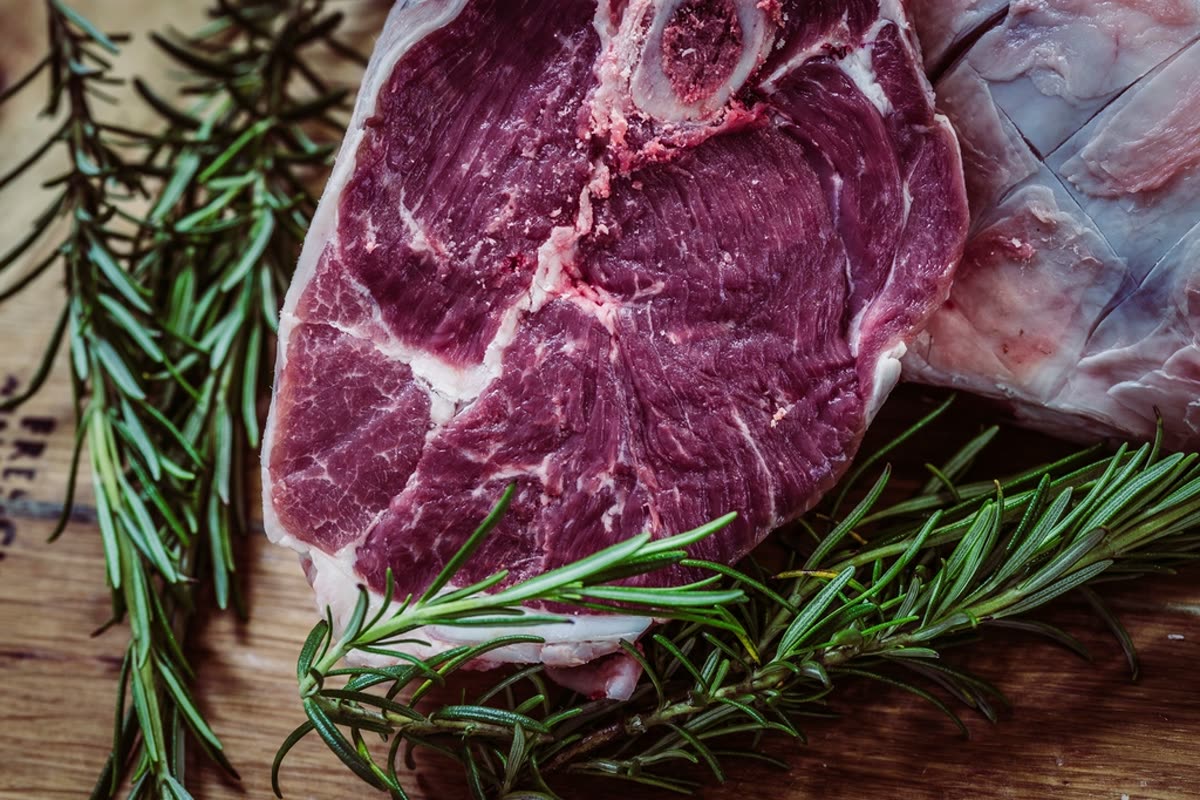
The UK reference intake for protein is 0.75g per kilogram of body weight per day for adults, which works out at 55g for men and 45g for women using the reference weights the figures were built on. Those numbers exist to stop deficiency, not to describe an optimum. On a meat-only diet you will pass them without trying, and the interesting question is not whether you get enough but what the extra gets you.
What the numbers look like in food
Protein per 100g raw, rounded, from the Composition of Foods Integrated Dataset:
- Beef mince, 20% fat: about 17g
- Rump steak: about 21g
- Lamb shoulder: about 20g
- Chicken thigh, skin on: about 19g
- Whole egg: about 12.6g
- Hard cheese: about 25g
- Butter: about 0.5g
- Beef dripping: effectively none
So the reference intake for a man is met by roughly 320g of mince, or by four eggs and 150g of rump. Most people reading this will eat two or three times that in a day without counting anything.
Two 250g portions of beef, which is a modest day for most people who try this way of eating, supplies something in the region of 85 to 105g of protein. For a 70kg adult that is 1.2 to 1.5g per kilogram. A person eating 1.5kg of meat is somewhere between 3 and 4.5g per kilogram. Both sit a long way above the reference intake, and only one of them has anything published behind it as a long-term pattern.
Why people argue for more than the minimum
Three strands, in descending order of how well supported they are.
The first is muscle. A widely cited meta-analysis of resistance training trials put the intake associated with the largest gains at around 1.6g per kilogram per day, with no further benefit above that. If you are lifting and want to keep muscle while losing fat, that is the figure to aim at, and a meat-heavy intake makes it easy.
The second is ageing. Older adults need more protein per meal to trigger the same muscle protein synthesis response, which is one reason the reference intake is quietly inadequate for someone in their seventies who is not eating much.
The third is satiety, which is the one people actually feel. Protein is the most satiating of the three macronutrients in short-term feeding studies, and it has the highest thermic effect, meaning roughly 20 to 30% of the energy in protein is spent digesting it, against 5 to 10% for carbohydrate and almost nothing for fat. The effect is real, modest, and it does not keep scaling once protein is a large share of intake.
What nobody can tell you
There is no long-term outcome data on a diet where protein is 30 to 40% of energy and plant food is zero. The studies that exist are short, small, and mostly about body composition in people who were previously eating a conventional diet. Anyone quoting a figure with confidence beyond that is extrapolating.
Who should not push protein up further
If you have reduced kidney function, a very high protein intake is a conversation to have with your GP or a renal dietitian before it is a decision. The same applies if you have had kidney stones.
Constipation is the ordinary problem, not a rare one. Protein-heavy eating with no fibre and too little water produces hard, infrequent stools in a lot of people by week two.
Do you need to count
For two weeks, yes, because everyone is wrong about portion size the first time. Weigh the meat, note the number, then put the scales away. A palm-sized piece of steak is about 100g raw, a fist is about 200g, and after a fortnight you will not need either rule.
The reason to count briefly rather than permanently is that the arithmetic is not the interesting part. Whether you are hungry at four in the afternoon is the interesting part, and that question does not need an app.
Sources
Disclaimer: Content published by BBBE Central is for educational, informational, and self-tracking purposes only and does not constitute medical advice. Always consult a qualified healthcare provider before making major dietary adjustments. See who should not follow this protocol.