Liver for people who hate liver
Which liver to start with, how to slice and cook it in three minutes, and how often the NHS says it is safe to eat.
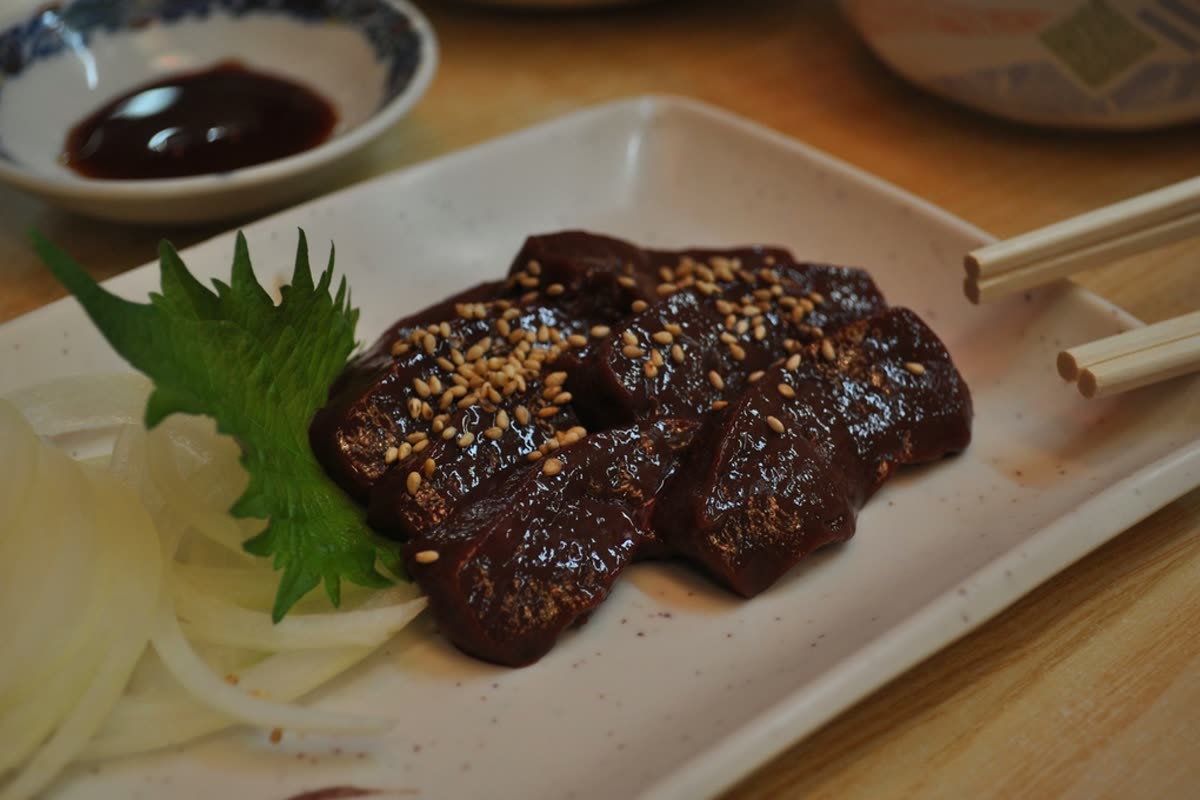
Liver is the one food on this site that people avoid on principle, usually because they had it once, cooked badly, in 1989. The fix is entirely technique: buy the milder version, slice it thin, cook it fast, and stop before it is grey.
What to buy
Lamb's liver is the mildest and the easiest place to start. Chicken livers are milder still and cook in three minutes, which makes them the lowest-risk entry point. Pig's liver is stronger and cheaper. Ox liver is the strongest and the cheapest, and the one to leave until you know you like the others.
Buy it fresh from a butcher if you can, on the day you plan to cook it. Supermarket tubs are fine, and frozen liver is fine too: thaw it in the fridge overnight, never on the counter.
Look for liver that is glossy and deep red-brown, with no green tinge and no strong smell beyond a clean, faintly metallic one.
Preparing it
Rinse it under cold water and pat it dry. Trim the obvious membrane and any large white ducts, which are chewy rather than harmful.
Cut it into slices about 1cm thick. Thick slices overcook on the outside while the middle is still wet; thin slices cook evenly and fast.
Soaking in milk for 30 minutes takes some of the iron tang out and is a real technique rather than a myth, at the cost of a little lactose if that matters to you. Water works less well. Skip both if you are in a hurry.
Salt it just before it goes in the pan.
Cooking it
Heavy frying pan, medium-high heat, a tablespoon of beef dripping or butter. It should be hot enough that the liver sizzles the moment it touches the pan, but not smoking.
90 seconds on the first side. Turn. 60 to 90 seconds on the second. That is it for a 1cm slice.
It is done when the centre is barely pink and springs back when you press it. Pushed further, it goes grainy and tastes of the pan rather than of itself, which is why so many people think they dislike liver.
Take it out of the pan and let it sit for two minutes. Add a knob of butter to the pan, let it foam, and pour it over.
Two rashers of bacon chopped and browned first, with the liver cooked in the fat, is the version that converts people. Cook the bacon until crisp, lift it out, then do the liver and put the bacon back at the end.
How often
Liver contains a lot of preformed vitamin A, and the NHS advises adults not to eat liver or liver products more than once a week. A 100 to 150g portion once a week is the sensible ceiling, not a target to push past.
Pregnant women are advised to avoid liver and liver products entirely, because of the vitamin A content. That advice is not negotiable and applies to pate as much as to a fried slice.
Children should have smaller portions than adults for the same reason.
What else it is
Liver and other organ meats contain iron, zinc, copper, B12 and folate in amounts that are hard to match in muscle meat. That is nutrient content, not a health claim, and it is a fair reason to include it in a rotation rather than a reason to eat it daily.
The cost of getting this right
Lamb's liver is around 5 to 8 pounds a kilo, chicken livers around 4, ox liver sometimes under 4. A 150g portion is well under a pound. There is no cheaper way to eat this well.
If you still hate it
Chop it small and mix it through mince at one part liver to four parts beef. The flavour disappears into the beef and the plate stays the same. That is how most people who say they eat liver actually eat it.
Sources
Disclaimer: Content published by BBBE Central is for educational, informational, and self-tracking purposes only and does not constitute medical advice. Always consult a qualified healthcare provider before making major dietary adjustments. See who should not follow this protocol.